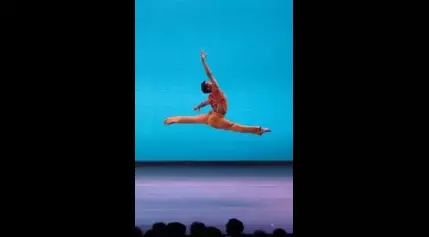
DANCE REVIEW: Dance Theatre of Harlem at the Jacob’s Pillow Dance Festival
2025-10-31
44.7K
2.7K
1.2K
Breaking Barriers: The Trailblazing Dance Theatre of Harlem
In a remarkable feat of artistic vision and determination, the Dance Theatre of Harlem has carved a lasting legacy as a beacon of hope and representation in the world of classical ballet. Formed in 1969 by the pioneering Arthur Mitchell and Karel Shook, this pioneering company has not only shattered the barriers that once stood in the way of Black dancers, but has also expanded the boundaries of the art form itself, captivating audiences with its bold, innovative, and inclusive approach to ballet.
Empowering the Underrepresented, Expanding the Artform
The Founding and Debut of a Groundbreaking Company
In 1969, the world of ballet was forever changed when Arthur Mitchell, the first African American principal dancer in the prestigious New York City Ballet, and Karel Shook, the Ballet Master of the Dutch National Ballet, founded the Dance Theatre of Harlem. This bold move came at a time when the art form was largely dominated by white dancers, and the very notion of a Black-led ballet company was seen as unthinkable. However, with the support of visionary figures like Ted Shawn, the founder of the Jacob's Pillow Dance Festival, the company made its debut in 1970, setting the stage for a remarkable journey of artistic excellence and social impact.
Defying Conventions, Embracing Diversity
The founding credo of the Dance Theatre of Harlem was simple yet profound: "You represent something larger than yourself." This guiding principle has underpinned the company's mission, inspiring its dancers to embody the dreams and aspirations of marginalized communities, and to challenge the traditional boundaries of ballet. Under the leadership of new Artistic Director Robert L. Garland, the company continues to push the envelope, presenting eclectic programs that blend classical repertoire with innovative, boundary-pushing works.
Balancing Tradition and Innovation
Garland's approach to choreography is a testament to the company's unwavering commitment to both honoring the past and embracing the future. In his 2022 work "Higher Ground," set to the music of Stevie Wonder, Garland skillfully navigates the delicate balance between respecting the conventions of ballet and crafting a fresh, unconventional theatrical experience. His refusal to succumb to traditional choreographic and theatrical customs, while maintaining a deep reverence for the art form, is a testament to the company's ability to redefine the boundaries of classical dance.
Connecting the Past, Present, and Future
The inclusion of George Balanchine's "Allegro Brilliante" in the company's program further reinforces the artistic pedigree from which the Dance Theatre of Harlem descends. As a choreographer who was instrumental in shaping the New York City Ballet, Balanchine's influence is woven into the very fabric of the company's legacy. Moreover, the similarities between "Allegro Brilliante" and Garland's "Higher Ground" in their shared exploration of pushing the boundaries of ballet conventions serve as a testament to the enduring artistic thread that connects the company's past, present, and future.
Captivating Audiences with Unbridled Passion
The program's closing performance of William Forsythe's "Blake Works IV (The Barre Project)" further showcased the Dance Theatre of Harlem's exceptional technical prowess and artistic versatility. The dancers' ability to seamlessly navigate Forsythe's demanding, relentless choreography with both power and subtlety, is a testament to the company's commitment to excellence and their unwavering dedication to their craft.As the Dance Theatre of Harlem closed out the 2024 season at Jacob's Pillow, one cannot help but eagerly anticipate the company's future endeavors, knowing that their trailblazing legacy will continue to inspire and captivate audiences for generations to come.