The Resurgence of Hard Controls: A Plea for a More Human Driving Experience
2025-11-17
30.9K
3.1K
988
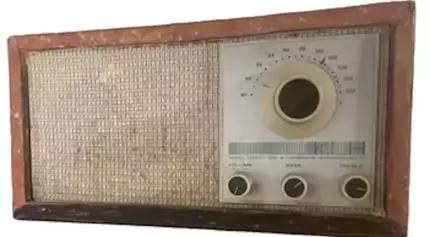
A few years back, during a rummage through a stack of dusty electronics at a garage sale, I chanced upon a remarkable find - a KLH Model Twenty-One desktop radio. It seemed to be in impeccable condition, and I purchased it on the spot for a mere , feeling as if I had won the lottery. The KLH Model Twenty-One FM Receiving System, designed by Henry Kloss in the 1960s (the K in KLH), is renowned among audiophiles for its rich sound and elegantly simple design. It measures about the size of a children's shoebox, with a walnut cabinet and a front panel featuring a large dial for tuning and three smaller knobs - one to turn it on and control the volume, and one each for bass and treble. The acoustics are truly remarkable, but what truly captivates me about it are those controls. They are a model of functionality and a joy to use. The on switch gives a deeply satisfying "click," and the tuner dial has just the right amount of resistance, making delicate adjustments a breeze, even when blindfolded.
Digital Touch Screens: A Growing Menace
Unfortunately, the kind of user experience offered by the KLH Model Twenty-One is becoming increasingly rare. Digital touch screens are taking over our electronics, appliances, and especially our automobiles. This shift has led to objects that are less functional, less satisfying to use, and worst of all, more dangerous. If you have rented or purchased a new car in the past year, you have surely noticed this phenomenon. The automotive dashboard, once a realm of buttons, dials, knobs, and switches, has been overtaken by digital displays. Tesla is famous (or infamous, depending on one's perspective) for the size of its touch screens, but virtually all carmakers now use touch screens for many, if not most, controls.I experienced this firsthand recently when I traded in our family's 2021 Subaru Forester for a 2025 model. Apart from the more rugged body styling (it seems that all cars now have to look like trucks), the most significant design change was the shift from hard controls to a touch screen. Where I used to be able to simply reach out and turn a dial to adjust the air conditioning without taking my eyes off the road, I now have to look down, find the digital "button" at the bottom of the screen, and touch it the appropriate number of times to reach the desired level. It is a far less intuitive process, and despite the indicator beeps, there is no certainty that I have actually set it to the right level or even touched the correct space. (The beep only indicates that something has been adjusted, not what it is.) In contrast, a dial or a switch allows you to know exactly what it is set to just by its position."We get a lot of feedback about how people have such a difficult time performing basic tasks like adjusting the climate or choosing a radio station because these systems are so complex," says Maddie McCarty, a human factors engineer at Consumer Reports. A simple Google search - "I hate my car's touch screen" - reveals numerous threads on the subject, with people venting their frustrations and suggesting potential workarounds, such as placing stickers on the screens to provide tactile guidance.Irritation is one thing, but safety is another. Although there are no specific statistics directly linking driving safety to touch screens, studies by the National Highway Traffic Safety Administration show that distracted driving causes accidents. In 2022 alone, more than 3,000 deaths were attributed to distracted driving. Touch screens, which divert a driver's eyes from the road, are a major distraction. For drivers (or passengers) with slightly compromised vision, the time with eyes diverted from the road is even longer."There is a correlation between eyes off the road and crash risk," says McCarty. "We are currently developing a research protocol to evaluate how potentially distracting the inside of a vehicle is, including how distracting touch screens are."As it stands, the federal government does not regulate dashboard design, only providing guidelines. However, there is some movement towards more oversight, especially from organizations like Consumer Reports that provide auto ratings. Euro NCAP, the nonprofit European automotive safety agency, is changing its safety-rating protocols to give preference to hard controls over touch screens.
The Technological Benefits and Economic Incentives of Touch Screens
Automakers often tout the technological benefits of touch screens, and there is no denying their ability to perform a myriad of tasks. Nobody wants a dashboard that resembles the cockpit of a 747, with a bewildering array of switches and levers. However, there is also a significant economic incentive for car manufacturers to favor touch screens. They are cheaper to produce. "It is easier at this point in time to push software updates to update a touch screen than to design multiple types of buttons and dials and manufacture them in different vehicles," says McCarty.More worryingly, the increasing prevalence of digital technology makes it easier for automakers to monitor driver data, which can be used for various purposes.To some extent, consumers are also to blame for their own predicament. Drivers hear about new technology and are eager to have it in their cars, only to be disappointed with the results. "Once they actually have it in their car, they realize that it is too difficult to use," says McCarty. Consumers may feel that they are being misled by automakers who extol the virtues of digital technology (and charge a premium for it) while hard controls are safer and easier to use."Human beings have bodies, and those bodies have hands with fingers and nerve endings. These provide a precise degree of control," says David Sax, author of The Future Is Analog: How to Create a More Human World. "The idea that you can simply replace this with a flat piece of glass and a digital image is a loss."Please don't view this as a luddite's lament or a nostalgic call for a return to the past. Designers have a responsibility to embrace advanced technology, but not every technology is suitable for every purpose.As the legendary German industrial designer Dieter Rams wrote: "Good design is as little design as possible." His products for Braun and Vitsoe - clocks, radios, chairs, calculators - exemplified this principle, as does Henry Kloss' Model Twenty-One.Automakers would do well to follow this advice and return to the haptic pleasures of hard controls - the act of flipping, pushing, spinning, and toggling. Consumers, in turn, need to make their voices heard and let automakers know that they want fewer bells and whistles and more buttons and dials.