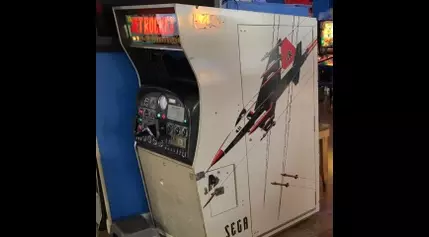
Sega Jet Rocket: The trailblazing ’70s arcade game with no computer or screen
2025-10-31
17.9K
357
153
Jet Rocket: The Pioneering Arcade Game That Paved the Way for Modern Gaming
In the annals of video game history, there are few titles that can claim the distinction of being true trailblazers. One such game is Jet Rocket, an electromechanical marvel introduced by Sega in 1970, which laid the groundwork for many of today's most popular gaming experiences. Though largely forgotten by the masses, Jet Rocket's innovative design and groundbreaking features have cemented its place as a seminal moment in the evolution of the industry.
Soaring Ahead of Its Time
The Visionary Premise of Jet Rocket
Jet Rocket's premise was deceptively simple, yet remarkably innovative for its time. Players were tasked with steering an air force jet on a nighttime mission, using a trigger button to shoot rockets at military targets passing below. This setup not only made Jet Rocket the world's first flight simulator game, but also the first first-person shooter and the first "open world" game, where players navigated a virtual environment.
Overcoming Technical Limitations
What made Jet Rocket truly remarkable, however, was the way it achieved these groundbreaking feats without the aid of a computer or video screen. Instead, the game relied on a complex system of mechanical and electromechanical components to create a truly immersive experience. At the heart of this system was a large, vertically oriented conveyor belt-like "canvas" with a flexible foam relief map of the landscape, including the targets. A mirror angled at 45 degrees reflected this canvas, creating the illusion of a three-dimensional horizontal landscape that the player could navigate by tilting the control panel's steering yoke.
Bringing the Action to Life
As the player steered their jet, they would see the virtual rockets they fired as orange streaks of light, thanks to a V-shaped array of sequentially illuminating lights reflected in a sheet of Plexiglass. When a target was hit, the corresponding light beneath the canvas would illuminate, causing the target to glow and triggering an explosion sound effect. This ingenious system, which relied on a series of electrical circuits and conductive mesh on the canvas, allowed Jet Rocket to deliver a remarkably realistic and responsive gameplay experience without the need for modern digital technology.
The Unfortunate Fate of a Pioneering Game
Despite its groundbreaking design and innovative features, Jet Rocket's success was short-lived. The game's release coincided with the emergence of the first video games, and it soon faced stiff competition from blatant, unlicensed copies produced by other manufacturers. Sega struggled to keep up with the demand, and by the time they were able to ramp up production, the market had already been saturated.
Preserving a Piece of Gaming History
Today, functional Jet Rocket machines are exceedingly rare, with only a handful of enthusiasts like Rusty Key working to restore and maintain these electromechanical marvels. While the game's market is limited due to its sheer size and the specialized knowledge required to keep it running, those who have the opportunity to experience Jet Rocket firsthand are often struck by its ingenuity and the level of craftsmanship that went into its design.
A Timeless Legacy
Jet Rocket's impact on the gaming industry cannot be overstated. Its pioneering features and innovative approach to creating an immersive, interactive experience have left an indelible mark on the medium, paving the way for the rich and diverse gaming landscape we enjoy today. Though largely forgotten by the masses, Jet Rocket's legacy lives on, a testament to the power of human ingenuity and the enduring appeal of gaming's earliest pioneers.