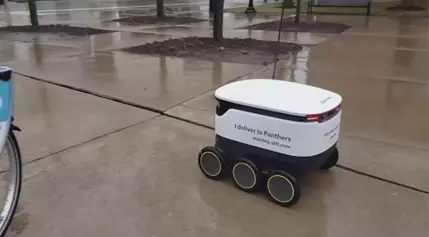
The University of Minnesota's Twin Cities campus is embracing the future of food delivery with the introduction of autonomous robots. Following approval from the Minneapolis City Council, a year-long pilot program has been launched, allowing up to 10 self-driving "Personal Delivery Devices" (PDDs) to roam the campus and deliver meals from participating restaurants.
Transforming the Campus Dining Experience
Convenience and Efficiency at the Forefront
The implementation of these autonomous delivery robots aims to enhance the campus dining experience for students, faculty, and staff. By leveraging cutting-edge technology, the university is able to provide a more convenient and efficient food delivery service. Students can now order their favorite meals from participating restaurants, such as Starbucks, Panda Express, and Erbert & Gerber's, and have them delivered directly to their location on campus.The robots are designed to navigate the campus sidewalks, traveling at a maximum speed of five miles per hour. This ensures a safe and controlled delivery process, minimizing the risk of collisions or disruptions to pedestrian traffic. Additionally, the robots are equipped with the ability to be overridden by a human operator, providing an added layer of safety and control.
Embracing Sustainable Solutions
The city of Minneapolis has highlighted the environmental benefits of the autonomous delivery robots. Unlike traditional delivery methods that rely on gas-powered vehicles, the PDDs are electronically powered, reducing the carbon footprint associated with food delivery. This aligns with the university's commitment to sustainability and efforts to promote eco-friendly practices on campus.By reducing the number of cars on the road for food deliveries, the program aims to contribute to a cleaner and more sustainable campus environment. This not only benefits the local community but also sets an example for other institutions to follow in the pursuit of greener solutions.
Addressing Concerns and Evaluating Impacts
While the introduction of autonomous delivery robots has generated excitement, it has also raised some concerns among the local community. Councilmember Jason Chavez expressed a valid concern about the potential impact on people's livelihoods, acknowledging the possibility of robots replacing human delivery drivers.To address these concerns, the city has emphasized the importance of a robust evaluation process after the year-long pilot program. Councilmember Aurin Chowdhury stressed the need to thoroughly review the findings and assess the overall impact of the program before considering any potential expansion.This thoughtful approach ensures that the university and the city are mindful of the social and economic implications of the autonomous delivery system. By carefully evaluating the pilot program, they can make informed decisions that balance the benefits of technological innovation with the well-being of the community.
Collaboration with Industry Leader
The University of Minnesota's partnership with Starship Technologies, the company operating the delivery robots, is a strategic move. Starship Technologies has a proven track record, having already delivered more than 6 million deliveries worldwide.This collaboration allows the university to leverage the expertise and experience of an industry leader in autonomous delivery systems. Starship Technologies' commitment to safety, efficiency, and customer satisfaction aligns with the university's goals for the pilot program.By working closely with Starship Technologies, the University of Minnesota can ensure a seamless integration of the autonomous delivery robots into the campus ecosystem. This partnership also provides an opportunity for the university to learn from the company's best practices and continuously improve the delivery service to meet the evolving needs of the campus community.
A Glimpse into the Future of Campus Dining
The introduction of autonomous delivery robots on the University of Minnesota's Twin Cities campus represents a significant step forward in the evolution of campus dining. This innovative pilot program not only enhances the convenience and efficiency of food delivery but also showcases the university's commitment to sustainability and technological advancements.As the program unfolds, the university and the city will closely monitor its impact, addressing concerns and evaluating the long-term viability of this autonomous delivery system. The success of this pilot could pave the way for similar initiatives at other universities, transforming the way students, faculty, and staff access and enjoy their campus dining experiences.The future of campus dining is here, and the University of Minnesota is leading the charge in embracing the power of autonomous technology to redefine the way we think about food delivery on college campuses.