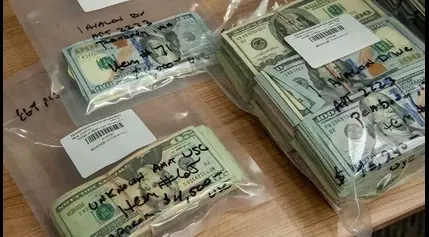
Old legal quirk lets police take your money with little reason, critics say
2025-11-16
36.4K
2.2K
240
The Uncertain Fate of Innocent Property Owners: A Deep Dive into the Controversial Civil Forfeiture Laws
In a startling display of government overreach, ordinary Americans find themselves caught in the crosshairs of a practice known as civil asset forfeiture. This controversial legal mechanism allows law enforcement agencies to seize property and cash from individuals without the need for a criminal conviction, often leaving innocent citizens fighting a costly and uphill battle to reclaim their rightful possessions.
Uncovering the Hidden Dangers of Civil Forfeiture
The Cheng Family's Ordeal: A Cautionary Tale
Henry and Minh Cheng, a husband and wife duo running a jewelry business in California, found themselves entangled in a web of legal turmoil when they sold a bulk order of gold chains to a retailer in Virginia. The agreed-upon payment of ,000 never made it to the Chengs, as the cash was seized by police officers in Indiana, where the package was routed through a FedEx shipping facility. Despite the Chengs and the Virginia retailer not being charged with any crime, the government claimed that large shipments of cash are often associated with criminal activity and seized the funds.Undeterred, the Chengs, backed by the nonprofit Institute for Justice, have filed a class-action lawsuit against the state, alleging a widespread pattern of unlawful package seizures at the Indiana facility. This case serves as a stark reminder of the inherent dangers of civil forfeiture, where innocent individuals can have their property taken without being accused or convicted of a crime.
The Troubling Expansion of Civil Forfeiture
The origins of civil forfeiture can be traced back to the founding of the American republic, when it was used to target European-owned ships engaged in smuggling and customs violations. However, over time, the practice has evolved, shifting from its original intent to target large criminal networks to a tool that is now often wielded against everyday citizens.In the 1970s and 1980s, civil forfeiture became a prominent tool in the "war on drugs," allowing law enforcement agencies to seize not only drugs and drug-dealing paraphernalia but also cash and other belongings from suspected drug criminals. This expansion has led to a booming source of profit for law enforcement, as they are often able to pocket most of the proceeds from the seized property.
The Racial and Poverty Dynamics of Civil Forfeiture
Legal experts, such as University of Pennsylvania law professor Louis Rulli, have highlighted the racial and poverty-related aspects of civil forfeiture. Rulli's work at a legal clinic in Philadelphia has uncovered numerous instances where minorities and low-income individuals have had their property seized during routine traffic stops, despite no evidence of criminal activity.Furthermore, Rulli has encountered cases where elderly homeowners have had their property seized due to the actions of their grandchildren, who may have sold small amounts of marijuana on the property without the owner's knowledge. These dynamics shed light on the disproportionate impact of civil forfeiture on vulnerable and marginalized communities.
The Burden of Proof: A Skewed System
A key aspect of civil forfeiture that has drawn widespread criticism is the burden of proof. In these cases, the action is taken against the property itself, rather than against a specific individual. This means that property owners do not have the same rights as defendants in criminal cases, such as the right to legal defense or the burden of proof being "beyond a reasonable doubt."Instead, the burden of proof falls on the property owner, who must often spend more on legal fees than the value of the seized property to fight the forfeiture. This financial burden, combined with the intimidating nature of taking on the government, has deterred many innocent owners from pursuing legal recourse, effectively allowing the seizures to stand.
The Unintended Consequences of Civil Forfeiture
Proponents of civil forfeiture argue that the practice is necessary to combat crime, particularly drug trafficking, by cutting off criminals' resources and disincentivizing illegal activities. However, critics contend that the unintended consequences of civil forfeiture often outweigh its perceived benefits.A study by the Institute for Justice found that after Nebraska effectively eliminated civil forfeiture in favor of criminal forfeiture, crime rates did not increase. This suggests that the practice may not be as effective in deterring crime as its advocates claim.Moreover, the financial incentives created by civil forfeiture have led to concerns about the potential for abuse, with law enforcement agencies being accused of using the practice as a means of boosting their budgets rather than serving the broader public interest.
The Fight for Reform: Glimmers of Hope
Despite the widespread concerns surrounding civil forfeiture, the practice remains in effect in most states, with only a handful of jurisdictions, such as North Carolina, Nebraska, New Mexico, and Maine, having effectively eliminated it. However, there have been some efforts to reform the system, with several states introducing measures to increase the burden of proof for law enforcement and improve the transparency of forfeiture procedures.At the federal level, the Fifth Amendment Integrity Restoration (FAIR) Act has been proposed, which seeks to raise the standard of proof for the government, provide legal counsel for those who cannot afford it when their homes are at risk, and prevent the evasion of state-level reforms through the use of federal authorities.While progress has been slow, the issue of civil forfeiture has gained bipartisan support, with both liberals and conservatives recognizing the need for significant reforms to protect the rights and property of ordinary Americans. As the debate continues, the fate of innocent property owners hangs in the balance, underscoring the pressing need for a thorough reconsideration of this controversial practice.