8,000 Car Designs for Future Car Designers to Begin With
Transforming Car Design with Generative AI
Iterative and Proprietary: The Car Design Process
Car design is an intricate and proprietary journey. Carmakers invest substantial time and effort in crafting designs that are both aesthetically pleasing and functionally efficient. The process begins with simulations where 3D forms are meticulously tweaked to optimize various aspects. This iterative approach allows for the exploration of different design possibilities before committing to physical prototypes. However, the details and specs of these simulations and designs are typically kept private, limiting the potential for collaboration and innovation.For instance, consider a leading carmaker spending several years on the design of a new model. They might make subtle changes to the length, underbody features, windshield slope, and wheel tread in their simulations. Each modification is evaluated for its impact on performance and aesthetics. But without sharing this data, other companies cannot learn from their experiences and build upon their work.
The Power of Generative AI in Car Design
MIT engineers have discovered that generative artificial intelligence tools hold the key to speeding up the search for better car designs. These tools can analyze vast amounts of data in seconds and identify connections to generate novel designs. By having access to a large dataset like DrivAerNet++, which encompasses over 8,000 car designs, AI models can be trained to quickly generate designs that could potentially lead to more fuel-efficient cars and electric vehicles with longer ranges.For example, an AI model trained on DrivAerNet++ can learn from the aerodynamic data of different car designs. It can identify patterns and optimize certain parameters to achieve better airflow around the vehicle. This allows for the rapid generation of new designs that might have taken years to develop through traditional methods. It's a game-changer in the automotive industry, enabling companies to explore more design possibilities in a fraction of the time.
Filling the Data Gap: The DrivAerNet++ Dataset
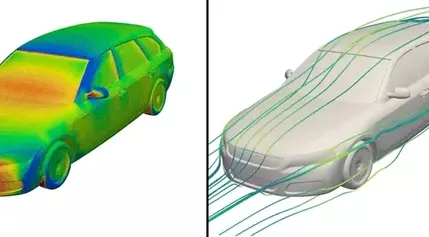
The development of DrivAerNet++ is a significant milestone in car design. This open-source dataset was created by MIT engineers and encompasses more than 8,000 car designs. Each design is represented in 3D form and includes detailed aerodynamic information based on simulations of fluid dynamics.The dataset was built by starting with baseline 3D models provided by Audi and BMW in 2014. These models represent common car categories such as fastback, notchback, and estateback. Through a morphing operation, the team systematically made slight changes to 26 parameters in each design, ensuring that each new design was distinct. They also ran complex computational fluid dynamics simulations to calculate the airflow around each design, resulting in a comprehensive dataset of physically accurate 3D car forms.
Applications and Implications
The DrivAerNet++ dataset has wide-ranging applications in the automotive industry. Researchers can use it to train AI models to learn specific car configurations with desirable aerodynamics. In seconds, these models can generate new designs with optimized aerodynamics, saving time and resources.Designers can also use the dataset in the opposite way. By feeding a specific car design into the trained AI model, they can quickly estimate its aerodynamics and potential fuel efficiency or electric range. This eliminates the need for expensive physical testing and allows for more efficient design iterations. It opens up new possibilities for innovation and sustainability in car design.
Overall, DrivAerNet++ is laying the foundation for the next generation of AI applications in engineering. It has the potential to promote efficient design processes, cut R&D costs, and drive advancements toward a more sustainable automotive future.